
Cultivating Resilience: Identifying Systemic Risk and Protective Factors in the Modern College Student Population
Leveraging Health Informatics and the EQUIP Model for Proactive Student Mental Health
Authors: Wilches, N., Morreale, S. | MindArch Health
April, 2026
ABSTRACT
This study evaluates the psychological well-being and stress resilience of Stony Brook University (SBU) students using the 5-Elements of Systemic Wellbeing Framework and EQ phases of the EQUIP Model. The primary objective was to establish a baseline of mental health promotion factors and protective environmental conditions to identify key intervention areas for prevention. A convenience sample of SBU students completed the Psychological Health Survey and the Protective Factors Assessment, which measure the five elements: Secure, Regulated, Valued, Decided, and Related. The findings indicated that students demonstrated relative strengths in Decided (Self-Efficacy) and Related (Interpersonal) domains across both measures. However, the study pinpointed the Regulated (Emotional Control) and Secure (Psychological Safety) domains as the primary areas for intervention, suggesting a need to enhance emotional control and establish more psychologically safe, reliable environments. Data analysis revealed that a previous mental health diagnosis is separate from a person's psychological health and resilience. Further analysis of geographical risk factors revealed short sleep duration, lack of social/emotional support, and lack of leisure-time physical activity as the top modifiable community risks. This research supports the utility of a non-clinical, strength-based framework in providing personalized, evidence-based preventive recommendations that are demographically agnostic and scalable for university populations.
BACKGROUND
Mental health issues among college students have become increasingly common. Studies show that 36% of students experience moderate to severe depression, 44% face moderate to severe anxiety, and 88% encounter severe stress. (Lee et al., 2021). The increase in mental health problems highlights the importance of mental health services for college students. University mental health resources, such as counseling, have been shown to reduce psychological stress and poor academic performance (Scruggs et al., 2023). The positive effects of mental health services have demonstrated long-lasting benefits, with depression being the most prolonged, lasting 13-18 months (Winzer et al., 2018). Students who receive mental health interventions have been shown to increase retention rates, as these programs raise grades and reduce suspensions (Antunes-Alves & Langmuir, 2021).
Student well-being not only affects the individual but also closely relates to faculty mental health. For example, higher levels of depressive symptoms in teachers have been linked to poorer student well-being and increased psychological distress (Harding et al., 2019). Poor mental health among students also contributes to faculty burnout. Teachers face emotional situations and are expected to serve as role models for students, which heavily influences emotional labor (Kariou et al., 2021). Student health affecting faculty mental health and burnout highlights the importance of researching and addressing students' mental health, as it is a vital aspect of a university's overall well-being.
Although mental health services have been proven to assist students in distress, mental health crises among students have continued to worsen (Duffy et al., 2019). Between 2013 and 2021, depression rates increased by 135% and anxiety by 110% (Lipson et al., 2022). Fifteen percent of students drop out during their first year of college, and those receiving treatment for a mental disorder are 4.3% to 8.3% more likely to do so (Zając et al., 2023). School dropout is directly linked to unemployment and limited job opportunities (Bangquiao & Galigao, 2025). Unemployment and lower weekly income among adults are more likely to be associated with homelessness (Heerde et al., 2020). The negative effects of mental distress emphasize the importance of symptom prevention for university students to help lower stress before a crisis arises.
For true prevention of symptoms to occur, a standardized method for measuring mental health in terms of well-being, rather than mental ill-health in terms of symptoms and disorder, would allow for mental health promotive and protective interventions before symptoms arise. Additionally, there is a large body of research on protective factors that buffer against the adverse effects of stress. A measure of protective factors can therefore provide a needs-based assessment, allowing for strengthening these protective factors in vulnerable populations, such as college students.
The overwhelming majority of college mental health surveys, particularly those that drive institutional and national reporting, are primarily symptom-based and often include satisfaction-based questions. While strengths-based questions (such as flourishing and health promotion) are being integrated into the most forward-thinking and comprehensive studies, they do not yet represent the majority focus in the broader landscape of college mental health assessment.
The 5-Elements of Systemic Wellbeing Framework includes two measures, one assessing positive psychological health factors (the presence of positive mental health characteristics) and the other measuring protective factors (the environmental success conditions that mitigate chronic stress) (Wilches, 2022). A previous study included a random sample of public respondents from online forums, yielding average mental well-being scores on these measures (Wilches et al., 2025). This study also found that the measure successfully pinpointed a specific area of need (a protective factor) in the population. For example, while participants felt confident in their relationships and decision-making, emotional regulation and feelings of safety were more vulnerable (Wilches et al., 2025).
The Healthy Minds Study examines the prevalence of mental health issues in higher education and the use of mental health services (The Healthy Minds Network, 2025). Analyzing data from this study in 2020-2021 showed that 60% of students experienced at least one mental health problem, nearly a 50% increase since 2013 (Lipson et al., 2022). The American College Health Association (ACHA) conducts a survey that assesses mental health, nutrition, sexual health, exercise, substance use, and related behaviors to better understand how these habits influence health and wellness among university students (California State University Channel Islands, 2025). While existing surveys identify behaviors, the 5-Elements Framework identifies systemic success conditions, social determinants of health risks, and an understanding of the lived experience.
Observing from 2016-2019, data analysis from this survey revealed that there had been greater increases in mental health indicators among LGBTQ+ individuals compared to heterosexual peers. Additionally, BIPOC students, especially women, have been found to have higher suicidal ideation and lower rates of diagnosis and treatment (Samek et al., 2024). Regarding research on university students in the general population, a gap exists in strength-based surveys concerning geographical, cultural, and environmental contexts. This highlights the need for strength-based, prevention-focused research at specific universities to improve data accuracy and support more effective treatment strategies. MindArch aims to bridge the "diagnosis gap" by providing non-clinical, strength-based entry points.
Due to the increasing rates of mental health issues among students, a strength-based prevention survey producing tailored recommendations in higher education may help to reduce risks and reverse rising rates in mental and behavioral health disorders before symptoms arise. This study implements the 5-Elements of Systemic Wellbeing Framework assessments at Stony Brook University to capture a baseline of psychological health and protective factors in a random, convenience sample via online recruitment. This participant group received an option to view an automated report of their own mental health and stress resiliency via a secure portal, providing agency over their mental health and a common language to understand mental well-being as separate from the absence of a mental disorder. This portal provided personalized, evidence-based activities to survey participants, using automated AI summarization and a rule-based engine within the survey’s software to produce customized results, lifestyle recommendations, and brief, specific preventive interventions.
The 5 - Elements of Systemic Wellbeing Framework
(Wilches, 2022)
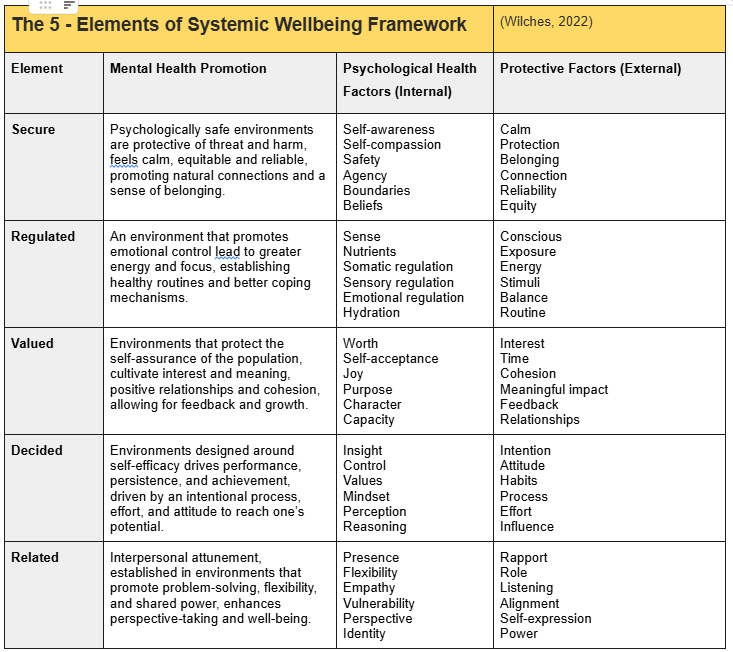
©️MindArch Health Inc.
METHODS
MindArch Health’s EQUIP Model supports systemic change through 5 stages: Examine, Quantify, Unite, Inquire, Plan. The ‘Examine’ phase (risk and vulnerability to mental health problems) and ‘Quantify’ phase (assessment of the psychological health and stress resiliency of the population) were used in this study, along with qualitative data regarding the approach (Wilches, 2023.
Participant Recruitment
This study surveyed students from SUNY Stony Brook University, a public institution with over 26,000 enrolled students (Stony Brook University, 2025), using two digital survey tools via a single access point. Participants were recruited through multi-method, convenience-based outreach over a 4-month period during the Fall 2025 semester. This included weekly social media posts on university-specific Reddit communities, Facebook groups, and LinkedIn. Targeted outreach was conducted via email and telephone to student governments, mental health committees, Greek life, athletic departments, extracurricular clubs, and academic department chairs. The recruitment materials outlined the study's purpose and highlighted its benefits for their student populations (e.g., a mental health action plan). Department chairs also received a summary of past findings to provide background on the 5-Elements of Systemic Wellbeing Framework and the assessments. Materials included a flyer with a QR code linking to the survey, a direct survey link, and an example of the survey results page.
Qualitative Data Collection
In the summer of 2025, a qualitative presurvey questionnaire was administered to evaluate students' perceptions of MindArch Health’s proactive mental health model. The pre-survey included open-ended questions to gather insights into students' views on the data-driven aspects of the proposed intervention. After collecting the data, responses were coded by themes and sentiment. Direct quotes that matched the identified themes were then extracted from the study, ensuring participants’ perspectives were accurately reflected in the findings.
Instrumentation and Scoring
Each survey consisted of 60 questions, measured on a 5-point Likert scale (Most Often, Often, Sometimes, Rarely, Very Rarely). The Psychological Health Survey consisted of 30 total question stems, incorporating 6 key factors within each of the 5-Elements as a part of the 5-Elements of Systemic Wellbeing Framework. The question stems were formed using positive framing, such as “I think of myself as a person with value” and “I am willing to think about things in new and different ways.” The Protective Factors Assessment also consisted of 30 total question stems, incorporating 6 key factors within each of the 5-Elements as a part of the 5-Elements of Systemic Wellbeing Framework. The question stems were also formed using positive framing, such as “I feel protected from threats or harm” and “I spend my time in ways that I find important.”
An average score was calculated for each “Element” on each survey. Single-question stems aligned with individual key factors were scored on a scale of 0-4. Given six question stems per element, a participant can have a maximum score of 24 per element and a maximum score of 120 per survey. Optional demographic data, including race, childhood economic status, gender, sex, and education, were requested from participants before the survey began. They were also voluntarily asked if they had been diagnosed with a mental or behavioral health disorder. The responses were made optional by allowing participants to skip any or all demographic questions.
Vulnerability Examinations
Community-level vulnerabilities were assessed using the CDC PLACES dataset (Centers for Disease Control and Prevention, 2025), focusing on mental and behavioral health disorders in the university's geographic area (ZIP code 11794). Prevalence rates were compared to local findings by analyzing the area’s data against similar suburban university communities and national averages. Subsequently, the data were examined to identify potential future risk factors based on their prevalence within the demographic area.
Data Analysis
Raw data from the MindArch Health platform was exported into a spreadsheet to support organization and analysis. Averages for each element were converted to percentages to identify significant patterns. Tables were created to compare element averages and total scores, aiding in the identification of relationships between mental health and resilience. Findings were then used to pinpoint key impact factors and the role of preventive care within mental health.
Exclusion Criteria
Data were collected from students at SUNY Stony Brook (n=56 total participants). To ensure the integrity of the comparative analysis between internal psychological health and external protective factors, an exclusion criterion was applied: only participants who completed both the Psychological Health Survey and the Protective Factor Assessment were included in the final analysis. This resulted in a final sample size of n=36 (a 64.3% completion rate).
RESULTS/FINDINGS
Qualitative Data Analysis
During the summer prior to the survey distribution (June- July 2025), students who showed interest in MindArch Health’s approach to systems-level prevention using health informatics and mental health promotion were asked to complete a digital open-ended questionnaire to share those thoughts. Responses were coded into three categories: ‘Personal Motivation and the Need for Change’, ‘Core Focus: Prevention, Proactivity, and Accessibility’, and ‘Interest in Data, Technology, and Innovation’. Findings suggest that students are strongly connected to mental health issues and are committed to prevention and crisis intervention with an interest in scalable, community-level solutions via technology.
Qualitative Data: Personal Motivation and the Need for Change
Many students cite mental health struggles personally or through family and friends as their primary motivation. Students have described experiencing depression, anxiety, burnout, and trauma, which led to a desire to “advocate and implement measures to support others” and “prevent others from experiencing the same thing”. One student mentions, “I personally suffered from depression and anxiety, and I didn’t know what I was experiencing, and lack of resources that I could get help from. The experience was bad, and I hope I can do something to prevent others from experiencing the same thing”, emphasizing the motivation to help others avoid a crisis.
Qualitative Data: Core Focus: Prevention, Proactivity, and Accessibility
Beyond personal motivation, students strongly support a shift from reactive to proactive care, highlighting the importance of preventive mental health strategies. Students often link mental health and well-being with physical health. "I believe that prevention is truly the key to mental health, well-being, and maintenance, the same way it would be for physical health." Additionally, students view long-term care goals beyond immediate intervention as very important. "What’s particularly compelling is how MindArch Health seems to aim for accessibility and long-term wellness, not just crisis intervention. Also, what makes MindArch Health’s mission interesting is how it addresses several long-standing gaps in the mental health space." The emphasis on constructing protective frameworks and resilience throughout entire communities further endorses prevention methods. The desire to be part of preventive healthcare underlines the significance of holistic, long-term wellness among students.
Qualitative Data: Interest in Data, Technology, and Innovation
A key aspect of developing prevention methods for students is providing the necessary tools. Integrating data, technology, and science is a primary focus. Students see these elements as crucial for achieving scale and effectiveness. They show a strong interest in evidence-based technology. One person states, “I find the integration of machine learning and strategic planning within the EQUIP model especially compelling... [It] aligns with my belief that mental health solutions should be proactive, community-based, and grounded in both science and social impact,” highlighting student interest in MindArch Health’s approach. Additionally, students are eager to improve care through technology, not replace it: "What excites me most about informatics is its ability to turn lived experiences into meaningful insights... I see informatics as a powerful way to bring mental health support into the spaces people actually live in, before a crisis happens." Enhancing technology to be smarter, more accessible, and more compassionate, while tailored to community needs, is a key belief among many students regarding prevention technology.
Demographic Data
Demographic data were collected from each survey to provide context on the participants’ socioeconomic and institutional backgrounds. The samples mainly consisted of full-time students at Stony Brook University (94.4%). Regarding both gender identity and sex at birth, women (58.3%) and females (69.4%) formed the largest group, followed by men (27.8%) and males (30.6%). The racial makeup was primarily Asian (44.4%), with white participants (25.0%) being the second-largest group.
From a socioeconomic standpoint, most respondents identified as “Average” (36.1%) or “Below Average” (27.8%) in response to their childhood household income. Students reported on their clinical history, with most indicating no prior diagnosis of disability (69.4%) or mental illness (61.1%). Residential and employment data revealed that most students (33.3%) lived on campus and held part-time, on-site jobs during the academic semester. The second-largest employment group (22.2%) comprised unemployed students with no caregiving responsibilities.
Geographical Risk Factors
Geographical systemic risk categories were developed by analyzing the CDC PLACES dataset through the Examine Vulnerabilities (E.Phase) framework of the EQUIP Model (Centers for Disease Control and Prevention, 2025)(Wilches, 2023). This analysis utilized MindArch Health’s nine research-based categories for the social determinants of mental health. The resulting risk data highlights significant factors affecting the psychological well-being of this population. The top three factors increasing the risk of mental and behavioral health problems in the survey population's county were identified as: short sleep duration among adults (39.3%); lack of social and emotional support among young adults (24.4%); and lack of leisure-time physical activity among adults (23.1%). Other notable figures include disability among adults (28.3%) and binge drinking (18.2% of the population).
5-Elements Survey Results
Out of the 36 survey takers at Stony Brook University, on average, students score an average of 55% Mentally Healthy based on the Psychological Health Survey and 54% Stress Resilience on the Protective Factors Assessment.
Table 1– Psychological Health Survey Scores
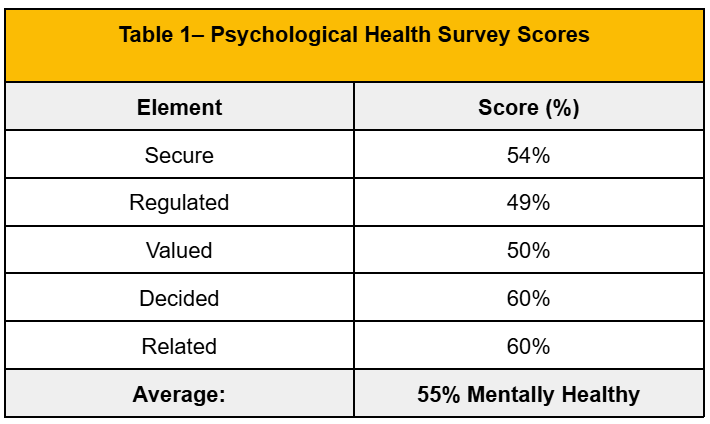
Table 1: Psychological Health Survey Scores within the Study entitled, “Cultivating Resilience: Identifying Systemic Risk and Protective Factors in the Modern College Student Population” MindArch Health
Table 2– Protective Factor Assessment Scores
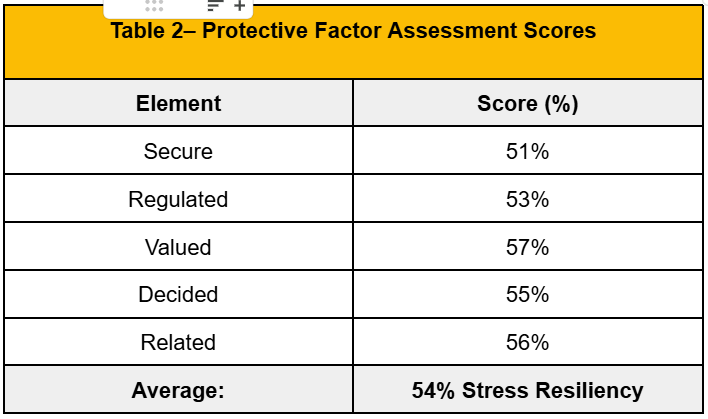
Table 2: Protective Factor Assessment Scores within the Study entitled, “Cultivating Resilience: Identifying Systemic Risk and Protective Factors in the Modern College Student Population” MindArch Health
DISCUSSION AND ANALYSIS
Population Risk of a Mental Health Problem
The risk factor data in the Examine phase of the EQUIP model suggests that lifestyle and community factors are major contributors to mental and behavioral health risk in this population (Centers for Disease Control and Prevention, 2025). Specifically:
Sleep, social connection, and physical activity are the top modifiable risks: The three most significant factors [short sleep duration (39.3%), lack of social/emotional support (24.4%), and lack of leisure-time physical activity (23.1%)] are all areas where targeted public health interventions and individual behavior change programs could have the largest impact on improving mental well-being.
A holistic approach is necessary: The combination of lifestyle risks (sleep, exercise, binge drinking) alongside inherent vulnerabilities (disability) highlights the need for a comprehensive intervention model that addresses both prevention and management.
Alcohol use remains a notable concern: With 18.2% of the population engaging in binge drinking, this factor represents a significant behavioral health risk that likely intersects with the other top factors (e.g., poor sleep quality and lack of social support).
Disability adds complexity: The 28.3% rate of adult disability indicates a substantial segment of the population may face chronic stress, economic hardship, and barriers to accessing support and activities, further compounding mental health challenges.
Psychological Health and Stress Resiliency
Using the 5-Element Mental Wellbeing scores from responses to the Psychological Health Survey and Protective Factors Assessment within the Quantify phase of the EQUIP Model, information about students’ strengths and weaknesses helped identify mental health patterns and needs (Wilches, 2022)(Wilches, 2023).
It was found that within the Psychological Health Survey, the Decided and Related scores were the strongest, while the Regulated scores were the weakest. This implies that many students thrive in environments designed around self-efficacy to drive performance, persistence, and achievement, and that interpersonal attunement, established in environments that promote problem-solving, flexibility, and shared power, enhances perspective-taking and well-being. Students may struggle with emotional control, which can lead to lower energy, reduced focus, and less healthy routines that could aid in developing better coping mechanisms.
Within the Protective Factors Assessment, the Valued scores were the strongest, and the Secure scores were the weakest. This indicates that students are successful in environments that protect self-assurance of the population, cultivate interest and meaning, positive relationships and cohesion, which allow feedback and growth, but lack psychologically safe environments that protect from threats, missing a sense of calmness, equity, and reliability that would promote natural connections and a sense of belonging.
When examining demographics, factors such as Race (White vs. Non-White) and Gender (Women, Men, etc.) did not significantly enhance the model's predictions. Results suggest that the framework's utility is driven by an individual’s current psychological state rather than demographic identity, supporting the model's application across diverse populations. This finding is especially important, as it suggests the MindArch Health model is demographically agnostic and helpful to any student, regardless of demographic factors.
Mental Health Status vs. Psychological Resilience
The data supports the idea that a mental health diagnosis is not a definitive proxy for overall psychological well-being or resilience. Several students who reported being diagnosed with a mental health condition maintained high "Secure" and "Decided" scores, such as one student scoring 83 in the "Decided" category despite a diagnosis. Conversely, many students without a mental health diagnosis reported very low scores in key areas, such as a student without a diagnosis scoring as low as 13 in the "Valued" category. This disparity suggests that mental illness (the presence of a diagnosis) and mental health (the presence of protective factors and psychological security) exist on separate tracks.
Economic and Academic Pressures
The intersection of work status and childhood income levels appears to correlate with fluctuations in psychological scores.
Students balancing "Full-time" status while "Employed Part Time Onsite" showed significant variance in their "Regulated" scores (e.g. emotional control, healthy diet), suggesting that external labor impacts internal stability.
Students from "Far below average" childhood income backgrounds showed a wide range of "Secure" scores, from 42 to 58, indicating that early economic factors may influence adult psychological security.
Students living "On-campus" generally showed more consistent "Related" scores (e.g. flexibility, empathy) compared to those living "With family" or "Off-campus," though high scores were still achievable for commuters.
Demographic Variations in Protective Factors
The data reflects a diverse student body where identity factors intersect with psychological outcomes.
Non-binary and Transgender students in the dataset often reported being diagnosed with mental health conditions, yet their "Decided" scores (often above 60) frequently matched or exceeded those of their peers.
Graduate students often displayed higher "Secure" scores compared to undergraduates, potentially reflecting a greater sense of academic or professional stability.
Scores for "Relatedness" remained relatively stable across different racial demographics (Asian, Black, White, Hispanic), suggesting relative strengths in things like rapport building, listening, expressing one’s thoughts, and problem-solving at Stony Brook University regardless of ethnic background.
Stony Brook Student Reflections
Qualitative questionnaires support a foundational interest and alignment of the target student population with MindArch Health's core approach. The categorized responses ("Personal Motivation," "Core Focus," "Interest in Data") provided essential themes that can inform the development of actionable strategies within the future Planning phase of the EQUIP model, ensuring solutions are relevant and address student priorities (Wilches, 2023). The findings validate that students are not only concerned with mental health but are specifically interested in the key elements of MindArch Health's strategy: systems-level prevention, health informatics, mental health promotion, and technology-driven, scalable solutions. The strong connection and commitment to prevention and crisis intervention provide crucial context for interpreting the results of this study, highlighting a motivated and engaged participant pool.
This study investigates the relationship between a specific university’s population and the 5-Elements Framework. Including more data from universities in different locations and with diverse characteristics (e.g., private vs. public, religious vs. non-religious) could further strengthen our understanding of the 5-Elements survey data and improve these results. The quantitative data emphasize the importance of mental health and preventive care for students in higher education. The survey offers valuable insights into students' strengths and areas where they may need additional support, such as Regulated and Secure factors, which highlight the need for greater emotional control and psychologically safe environments.
LIMITATIONS
Limitations of the study include attrition between the Psychological Health Survey and the Protective Factors Survey. This could cause the survey to overrepresent participants who tend to score similarly. For example, the data might overrepresent individuals with higher psychological protection, as those who dropped off between surveys may have had lower levels of protective factors. The drop-off rate could also be due to survey fatigue, disinterest, time constraints, or technical issues. The sample size is small for definitive proof for a demographically agnostic model, however, the preliminary lack of variance across groups is a promising indicator for the framework's scalability.
This study uses convenience sampling, which may limit the generalizability of the findings to the entire population and increase the risk of sampling bias. Additionally, some demographics were more heavily represented than others. ‘White’ and ‘female’ respondents made up the largest demographic groups, which could restrict applicability to other populations. Future research could benefit from a larger and more diverse sample.
CONCLUSION
The study explores the psychological health and protective factors of Stony Brook University students using the 5-Elements Framework, in relation to risk factors and demographic variables. Though the surveys may be limited by convenience sampling and attrition, they provide valuable insights into the student population’s strengths and weaknesses, which are crucial for preventive care. MindArch Health’s survey tool has been proven demographically agnostic, demonstrating its ability to help individuals regardless of background and emphasizing its role as a universal mental health tool for all students.
By automating the ‘Examine’ 'Quantify' data analysis to support a comprehensive and customized 'Plan' via a rule-based AI engine, machine learning, and predictive analytics, MindArch Health demonstrates a scalable pathway for providing both systemic interventions and immediate, personalized intervention to at-risk student populations before the need for costly clinical and emergency services.
In future studies, using the 5-Elements Framework would benefit from larger and more diverse samples to strengthen the findings. Exploring this will not only enhance understanding of different populations but also help develop tools tailored to each individual's needs in a preventive mental health setting.
MindArch Health continues to refine these predictive engines to provide real-time, scalable mental health autonomy for university populations.
REFERENCES
Antunes‐Alves, S., & Langmuir, T. (2021). Evaluating a combined intervention targeting at‐risk post‐secondary students: When it comes to graduating, Mental Health Matters. Counseling and Psychotherapy Research, 21(2), 313–323. https://doi.org/10.1002/capr.12390
Bangquiao, S. G., & Galigao, R. (2025). Economic bearing of school dropouts on human capital. Pantao (International Journal of the Humanities and Social Sciences). https://doi.org/10.69651/pijhss040219
Centers for Disease Control and Prevention. (2025). Places: Local data for Better Health. Centers for Disease Control and Prevention. https://www.cdc.gov/places/index.html
Duffy, M. E., Twenge, J. M., & Joiner, T. E. (2019). Trends in mood and anxiety symptoms and suicide-related outcomes among U.S. undergraduates, 2007–2018: Evidence from two national surveys. Journal of Adolescent Health, 65(5), 590–598. https://doi.org/10.1016/j.jadohealth.2019.04.033
Explore our data - healthy minds network. Healthy Minds Network. (2025). https://healthymindsnetwork.org/research/data-for-researchers/
Facts & Rankings. Stony Brook University Facts & Rankings | Nationally Recognized. (2025). https://www.stonybrook.edu/about/facts-and-rankings/
Harding, S., Morris, R., Gunnell, D., Ford, T., Hollingworth, W., Tilling, K., Evans, R., Bell, S., Grey, J., Brockman, R., Campbell, R., Araya, R., Murphy, S., & Kidger, J. (2019). Is teachers’ mental health and wellbeing associated with students’ mental health and wellbeing? Journal of Affective Disorders, 242, 180–187. https://doi.org/10.1016/j.jad.2018.08.080
Heerde, J. A., Bailey, J. A., Toumbourou, J. W., Rowland, B., & Catalano, R. F. (2020). Prevalence of homelessness and co-occurring problems: A comparison of young adults in Victoria, Australia and Washington State, United States. Children and Youth Services Review, 109, 104692. https://doi.org/10.1016/j.childyouth.2019.104692
Kariou, A., Koutsimani, P., Montgomery, A., & Lainidi, O. (2021). Emotional labor and burnout among teachers: A systematic review. International Journal of Environmental Research and Public Health, 18(23), 12760. https://doi.org/10.3390/ijerph182312760
Lee, J., Jeong, H. J., & Kim, S. (2021). Stress, anxiety, and depression among undergraduate students during the COVID-19 pandemic and their use of mental health services. Innovative Higher Education, 46(5), 519–538. https://doi.org/10.1007/s10755-021-09552-y
Lipson, S. K., Zhou, S., Abelson, S., Heinze, J., Jirsa, M., Morigney, J., Patterson, A., Singh, M., & Eisenberg, D. (2022). Trends in college student mental health and help-seeking by Race/ethnicity: Findings from the National Healthy Minds Study, 2013–2021. Journal of Affective Disorders, 306, 138–147. https://doi.org/10.1016/j.jad.2022.03.038
National College Health Assessment. National College Health Assessment - Student Health Services - CSU Channel Islands. (2025). https://www.csuci.edu/studenthealth/ncha
Samek, D. R., Akua, B. A., Crumly, B., & Duke-Marks, A. (2024). Increasing mental health issues in college students from 2016-2019: Assessing the intersections of Race/ethnicity, gender, and sexual orientation. Journal of Affective Disorders, 354, 216–223. https://doi.org/10.1016/j.jad.2024.03.068
Scruggs, R., Broglia, E., Barkham, M., & Duncan, C. (2023). The impact of psychological distress and university counselling on academic outcomes: Analysis of a routine practice‐based dataset. Counselling and Psychotherapy Research, 23(3), 781–789. https://doi.org/10.1002/capr.12640
Wilches, N. (2022). The 5-Elements of Systemic Wellbeing Framework: A conceptual model for preventive mental health. https://www.mindarchhealth.com/articles/137nkjmzndqdksdnptlneocwwxs15b
Wilches, N. (2023). The EQUIP Model: A Socioecological Framework for Applied Preventive Mental Health. https://www.mindarchhealth.com/articles/1onqvv0qdicwvtun8s55un4l72rxd6
Wilches, N., Dominguez, G., & Khan, M. (2025). Wellbeing Framework Study: Protective Factors and Mental Health. MindArch Health. https://www.mindarchhealth.com/articles/0bk2jj4nl6auu1vffkniflwmvay00m
Winzer, R., Lindberg, L., Guldbrandsson, K., & Sidorchuk, A. (2018). Effects of mental health interventions for students in higher education are sustainable over time: A systematic review and meta-analysis of randomized controlled trials. PeerJ, 6. https://doi.org/10.7717/peerj.4598
Zajac, T., Perales, F., Tomaszewski, W., Xiang, N., & Zubrick, S. R. (2023). Student Mental Health and dropout from Higher Education: An analysis of Australian administrative data. Higher Education, 87(2), 325–343. https://doi.org/10.1007/s10734-023-01009-9
