
Building Digital Resiliency in 3rd Graders: A Pilot Study
An evaluation of the Long Island Explorium, “See Clearly, Choose Kindly” Meta-Cognitive Science Curriculum in 3rd Grade Classrooms
MindArch Health
August, 2026
Suggested Citation:
MindArch Health. (2026). Building Digital Resiliency in 3rd Graders: A Pilot Study. An evaluation of the Long Island Explorium, “See Clearly, Choose Kindly” Meta-Cognitive Science Curriculum in 3rd Grade Classrooms.
Acknowledgements:
MindArch Health expresses its gratitude to the Long Island Explorium Children’s Museum of Science and Engineering for their partnership. We also thank our collaborators from Stony Brook University and the Columbia University School of Public Health, specifically Sydnee Lau, Melody Gonzalez, and Faria Tanisha.
Abstract
As digital media consumption accelerates among late elementary students, children face early exposure to digital risks, including social comparison, exposure to idealized images, and persuasive platform designs that challenge emotional self-regulation. Rather than relying solely on restrictive device bans, early preventative interventions are needed to build internal "digital resilience,” the capacity to recognize, manage, and recover from online risks. This case study evaluates the feasibility and preliminary impact of "See Clearly, Choose Kindly," a universal Tier 1 digital resilience pilot curriculum developed by the Long Island Explorium in partnership with MindArch Health from March 2026 through June 2026. The program aims to transition third-grade students (ages 8–9) from passive media consumption to active agency by strengthening their foundational psychological health and digital skill transfer. A pre-post intervention design (T0, T1) was conducted across two elementary schools (N=163 total students assessed). The 4-lesson curriculum covered sampling bias, variable reward systems, critical media literacy, and somatic emotional regulation. Data collection utilized the MindArch Health Student Self-Assessment measuring device access (Section A), baseline behaviors (Section B), the 5-Elements of Systemic Wellbeing (Secure, Regulated, Valued, Decided, Related) (Section C), and the Resilience-to-Action Bridge (Section BC) alongside delayed formative exit tickets (n=76) and teacher pedagogical reflections (N=9).
Background
Digital use among youth
With increased digitalisation comes new opportunities for advancements in health. From the expansion of access to healthcare via telehealth, to promoting wellbeing through education and social interaction, digital innovation offers new means for public health improvements. However, it also brings new challenges to public health, especially for younger generations. Literature suggests that allowing children to roam the digital world without sufficient safeguarding can lead to detrimental impacts on mental health, physical health, and cognitive development (Holly et al. 2024). Around ages 9-10, 75% of youth report less than 30 minutes a day using social technology (Borodovsky, 2024). However, TV, video games, and online video use is significantly higher (Borodovsky, 2024). Children ages 9-10 consume approximately 4 hours of screen time per day watching TV shows and movies, playing video games, and streaming videos on platforms like Youtube (Nagata 2021). Whereas by 13-17 years old, 95% of youth ages 13-17 reported using social media according to the Surgeon General Report, with over a third stating that they used social media “almost constantly” (Office of the Surgeon General, 2023). Although 13 years of age is typically required by most social media platforms in the U.S., about 40% of youth ages 8-12 use social media (Office of the Surgeon General, 2023) indicating that youth may benefit from preventive interventions before the age of 13.
Generally, frequent use of social media, video messaging, and instant messaging were associated with poorer mental health, eating disorder symptoms, and increased suicidal ideation and attempts (Kerr and Kingsbury, 2023). These negative health associations are partially explained by sleep inadequacy and cybervictimization (Kerr and Kingsbury, 2023). Furthermore, social media use has shifted peer acceptance away from qualitative experiences and towards quantitative feedback such as likes, followers, and comments, leading to a heavily comparative culture that damages self-esteem (Weigle and Shafi, 2023). Similarly, there is evidence that frequent, problematic video gaming is associated with higher anxiety, depression, sleep disorders, and suicidal behaviors (Canale, 2025). Literature also suggests that heavy video streaming is associated with similar negative mental health outcomes (Frielingsdorf, 2025). As children age from 9-10 to 12-13 years, average screen time increases by over 3 hours each day (Twenge, 2018). This increased use of digital devices calls attention to the importance of resilience before they reach adolescence. Early digital use reveals small predictive links to negative mental health outcomes, though effect sizes are small (Paulich, 2021).
What is Resilience
Throughout childhood and adolescence, individuals experience life events that challenge them. An individual’s resilience is their capacity to sustain positive adaptation despite experiencing these distressing and demanding conditions in society and in life (Lee et al., 2012). While resilience is prevalent throughout the lifecourse, research indicates that early childhood is an important window for promoting and understanding resilience because this is when roots of competence and critical protective systems for human development emerge (Masten and Gewirts, 2006). Research in brain development and neuro plasticity suggests that early experiences shape the developing brain, thus early intervention can provide the resources necessary for healthy brain development. By equipping children with healthy adaptive resources and strong skills, they will become better prepared with human and social capital that will help them succeed in school and broader society. Furthermore, no child is immune to the consequences of adversity, especially as risks accumulate. Early intervention is essential to provide them with the resources needed to navigate life’s challenges (Masten and Gewirts, 2006).
Digital Resilience
As pre-teens (8-12 years old) navigate the digital world and transition into increasingly independent years of adolescence, their digital resilience becomes especially salient. Digital resilience can be defined as a dynamic and cyclical process through which individuals and groups learn to recognize, manage, and recover from online risks (Hammond et al., 2023).
This resilience is a malleable capacity to moderate the negative impacts of digital media risks while promoting the opportunity to thrive online. Rather than focusing exclusively on risk avoidance and safety, digital resilience orients youth to take full advantage of the technological ecosystem for all of its benefits (Hammond et al., 2023). Digital interactions have become the norm for most citizens, therefore, it is critical to equip today’s youth with the tools and maturity to navigate the space responsibly.
Program Rationale
A common initial response is to restrict children’s screen time in an effort to mitigate the potential negative effects of digital media in school. Digital distractions can lead to personal performance issues, disrupted classroom instruction, problematic technology use, and cognitive offloading due to overreliance on AI (Martin et al., 2025). Across the country, school districts have implemented “Distraction-Free Schools” policies to limit the use of digital devices throughout the school day. In New York State, K-12 public schools, charter schools, and the Board of Cooperative Educational Services are enforcing bell-to-bell restrictions on smartphones and internet-enabled personal devices (New York State, 2025). Prior to the implementation of this state-level policy, New York City prohibited students from using personal internet-enabled electronic devices on school grounds during the school day (New York City Public Schools, 2025). The policies aim to reduce distractions within the classroom.
Due to the increasing prevalence of digital tools and access to the internet, educators, policy makers, and guardians alike must be strategic in tackling the challenge of supporting digital resilience in youth. Long Island Explorium’s latest initiative in collaboration with MindArch Health, “See Clearly, Choose Kindly”, aims to build resilience, or, “Internal Armor”, within their students. Focusing on systemic mental well-being, this project moves beyond digital restrictions and brings together behavioral science, community collaboration, and educational innovation. The curriculum teaches students the biology and mechanics of screens, touching on topics such as dopamine, algorithms, and sampling bias, to build internal agency within students rather than simply giving them a set of rules to follow.
Digital resilience is a pivotal determinant of success because it directly influences a student’s academic achievement, social interactions, and overall life satisfaction (Qi and Yang, 2024). Well-developed digital resilience has been proven to protect against technological stress, help adolescents manage anxiety and frustration associated with digital life, enhance digital competence, and enable individuals to maintain a harmonious relationship with technology. It also allows individuals to learn from and recover from adverse online experiences (Qi and Yang, 2024).
Although a majority of the literature focuses on social media and mental health among adolescents (10-19 years-old), Long Island Explorium is focusing their intervention on 3rd-grade aged youth (8-9 years-old) as a preventative measure to equip students with resilience skills before adolescence. As pre-teens (8-12 years-old) transition to adolescence, they seek increasingly more independence at home, school, in society, and online (Hammond et al., 2023). Therefore, this period of time is critical for educators to support and equip pre-teens with tools to navigate these transitions.
Methods
Due to the increasing prevalence of digital tools and access to the internet, educators, policy makers, and guardians alike must be strategic in tackling the challenge of supporting digital resilience in youth. Long Island Explorium’s latest initiative, in collaboration with MindArch Health, “‘See Clearly, Choose Kindly,’ aims to build resiliency or “Internal Armor” within their students. This curriculum is a four-lesson digital resilience pilot program developed by the Long Island Explorium in partnership with MindArch Health from March 2026 through June 2026 (Long Island Explorium, 2026; Wilches, 2022). The curriculum consists of four 35-minute comprehension lessons delivered across four weeks.
Each lesson addressed a distinct scientific concept central to digital resilience, fostering metacognitive skill transfer. Lesson 1, “The Highlight Reel Experiment,” introduced the concept of sampling bias and its connection to social comparison. Lesson 2, “ Your Brain on Likes,” explored variable reward systems and the biological basis of digital habit formation. Lesson 3, “Myth or Evidence?” developed critical media literacy skills by teaching students to distinguish between evidence, opinion, and misinformation. Lastly, lesson 4, “ Feelings Are Signals,” connected physical body signals to emotional awareness and regulation. The present study evaluated the curriculum's impact on third-grade students (ages 8-9) across two participating elementary schools.
Instrumentation
A pre-post design was utilized, with the MindArch Health Student Self-Assessment administered at baseline, T0, and upon program completion, T1 (COMPLETE PACKAGE, 2026). The instrument measured student device access (Section A), baseline online behavior (Section B), and mindset growth across the five domains of the MindArch Health 5-Elements of Systemic Wellbeing Framework (Section C): Secure, Regulated, Valued, Decided, and Related (Wilches, 2022), using a three-point Likert scale. Section BC acted as a resilience-to-Action Bridge to measure digital skill transfer and the 5-Elements of Systemic Wellbeing.
The 5-Elements Framework assesses both foundational psychological health and protective factors across five domains (Wilches, 2022). The original broader resilience framework was adapted to measure digital resilience across the 5-Elements and shortened from 60 question stems to 5 question stems, one in each element for the target 8-9 year old age group. Secure measures internal Psychological safety and a sense of belonging among peers. Regulated evaluates the capacity to manage emotions and maintain balance through somatic awareness and healthy daily routines. Valued assesses self-acceptance and internalized self-worth independent of external feedback. Decided measures intentional decision-making and growth mindset, specifically a student's belief that effort and practice drive learning. Related evaluates interpersonal empathy and the ability to build rapport and feel heard within a group setting.
Formative Assessment
Formative data were collected through four open-ended exit ticket prompts, each corresponding to one of the four lessons, distributed no earlier than two days following, and within four school days of each lesson, establishing a minimum 48-hour delay to avoid recency fact-recall bias.
In addition to the baseline metrics, qualitative student reflections were captured directly within the pre-post self-assessment instrument using an Appreciative Inquiry prompt (Section D), rooted in strengths-based reflection (Waters & White, 2015), which asked students to evaluate a past positive safe online experience and identify ways to replicate it.
Teacher Reflections and Observations
Teachers provided curriculum reflections to assess pedagogical efficacy across comprehension, application, engagement, and relevance following each lesson. Furthermore, teachers utilized qualitative Teacher Observation Notes to record real-time classroom instances of students applying the science of wellbeing or media literacy, such as utilizing a pause routine.
Privacy and Data Integrity
All student data remained anonymous using assigned random ID numbers, and results were reported exclusively at the aggregated classroom level to protect student privacy.
Results
A total of 163 unique students were assessed at T0 or T1 from 2 participating schools.
Section A: Student Device Access
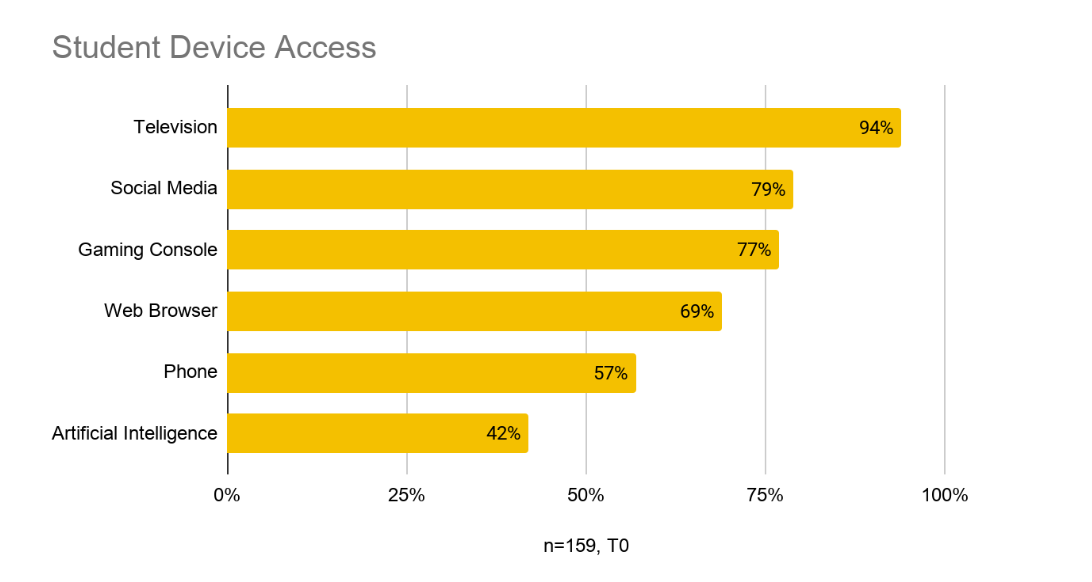
159 students were recorded at T0 (baseline - before the curriculum) to assess how much access they had to various devices (COMPLETE PACKAGE, 2026). Of those, 94% of participants had access to television, 79% to social media, 77% to a gaming console, 69% to a web browser, 57% to a phone, and 42% to artificial intelligence.
Student Device Access
copyright MindArch Health Inc.
Section B: Baseline Online Behavior
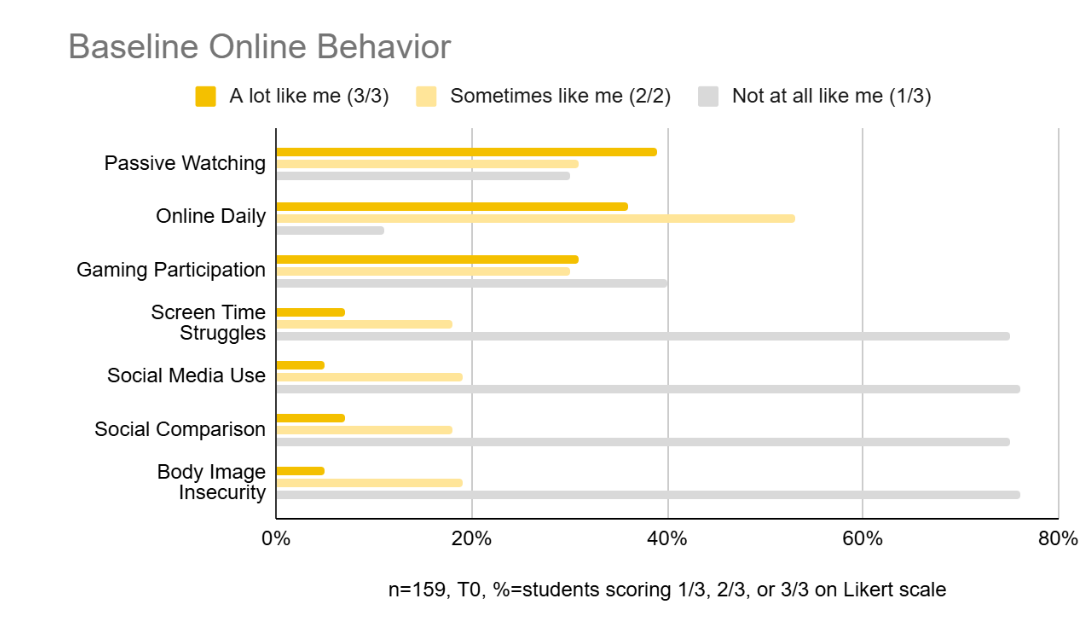
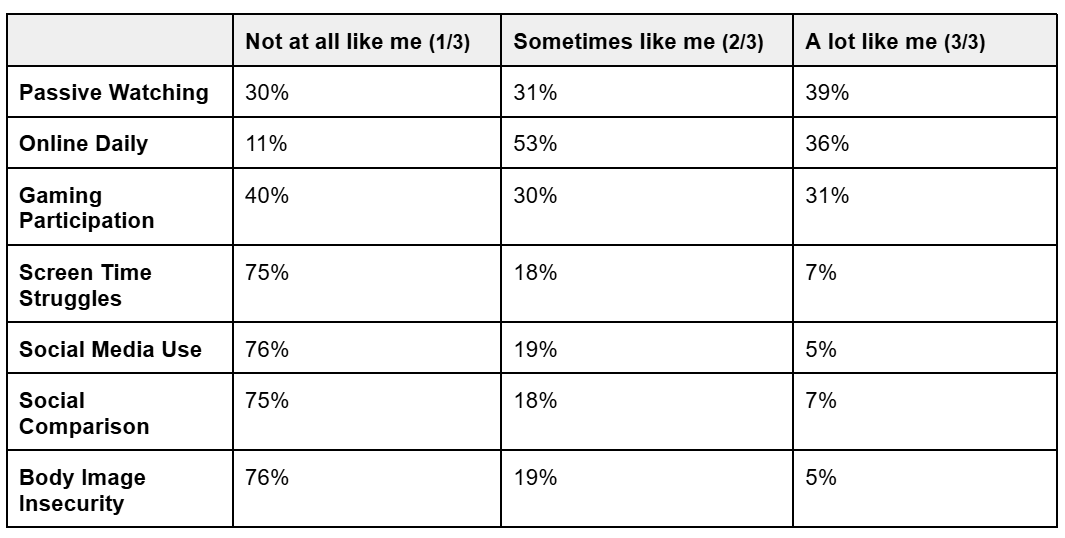
Baseline online behavior was measured on a Likert scale ranging from 1-3 (Not at all like me, Sometimes like me, A lot like me), recording 159 students at T0. Students were assessed on whether they participated in passive watching, used the internet daily, participated in gaming, struggled with screentime, and used social media (COMPLETE PACKAGE, 2026). The largest percentage (39%) of students responded “A lot like me” to passive watching. The smallest percentages of students responded “A lot like me” to screen time struggles (7%) and social media use (5%), social comparison (7%), and body image insecurity (5%). A quarter of students report screen time struggles and approximately the same number of students use social media. Within this cohort, the primary driver of screen time struggles was interactive gaming. It is important to note here that although at T0, 79% of students reported having access to social media, only 5% scored a 3/3 for social media use. This demonstrates how access does not equate to use.
Baseline Online Behavior 1
copyright MindArch Health Inc.
Baseline Online Behavior 2
copyright MindArch Health Inc.
Section BC: Resilience to Action Bridge
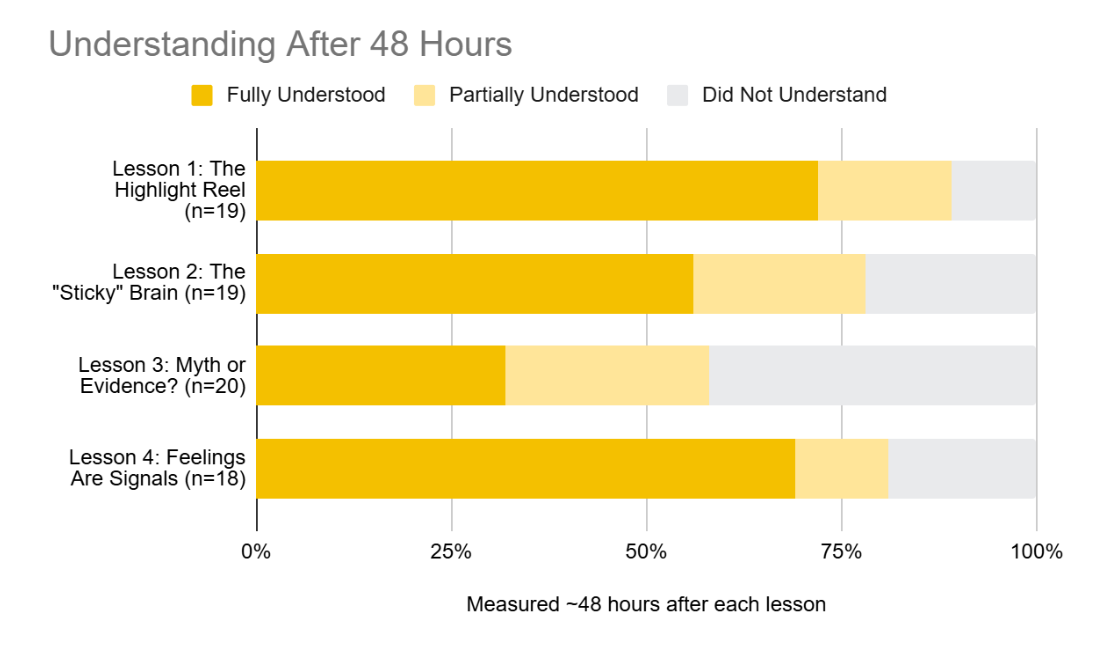
76 student (N=76) exit ticket responses were recorded 48 hours after each lesson was conducted to measure how well students understood each concept (COMPLETE PACKAGE, 2026). Those scoring a 3 of 3 on the Likert scale “Fully understood” the lesson. Those scoring 2 of 3 “Partially” understood it. Those with 1 of 3 “Did not” understand it. After Lesson 1: The Highlight Reel, 72% of participants fully understood recognizing sampling bias, while 17% partially understood it and 11% did not understand it. After Lesson 2: The “Sticky” Brain, 56% of students fully understood how apps keep you hooked, 22% partially understood, and 22% did not understand it. After Lesson 3: Myth or Evidence, 32% of students fully understood critical thinking online, 26% partially understood it, and 42% did not understand it. Finally, after Lesson 4: Feelings Are Signals 69% of students fully understood listening to your body, 12% partially understood it, and 19% did not understand it.
Understanding of the curriculum after 48 hours
copyright MindArch Health Inc.
Section C: 5-Elements Secure, Regulated, Valued, Decided, Related
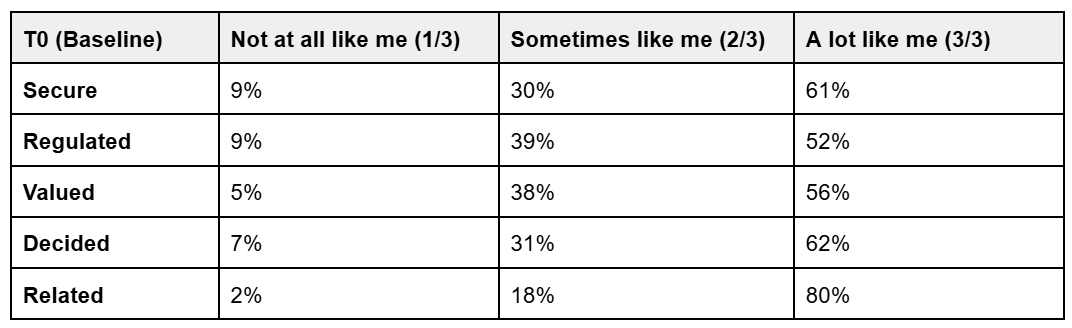
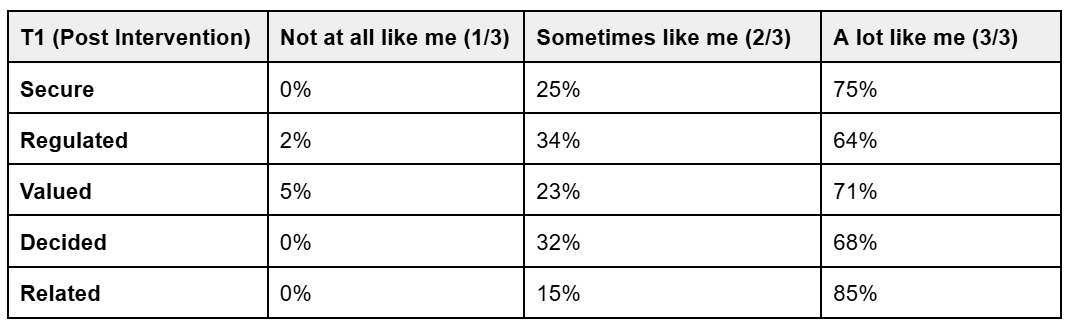
Five out of nine teachers administered both the pre and post assessment (n=56), whereas four teachers completed the baseline assessment only (n=159) (COMPLETE PACKAGE, 2026). At both T0 and T1, a majority of students answered “A lot like me” to all 5-elements questions. A smaller percentage of students answered “Sometimes like me” and the fewest students answered “Not at all like me”. Compared to T0, more students at T1 resonated with the “A lot like me” category for all 5-elements. Fewer students resonated with the other two categories, “Sometimes like me” and “Not at all like me” after the intervention was implemented.
Prior to the curriculum (T0 - Baseline), students self-rated their digital resiliency across 5-Elements:
Baseline 5-Elements Scores
copyright MindArch Health Inc.
Following the curriculum (T1 - Post-Intervention), students self-rated their digital resiliency across the same 5-Elements:
Post-Intervention 5-Element Scores
copyright MindArch Health Inc.
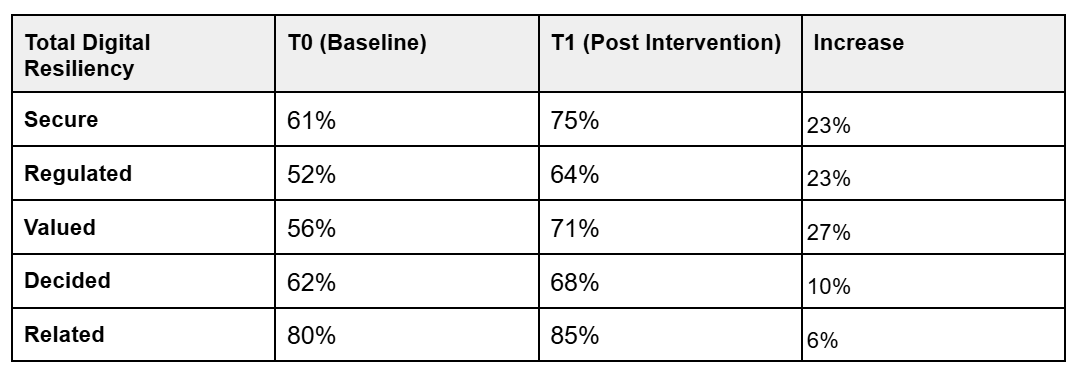
Student scores increased in all 5-Elements from 6% at the smallest improvement to 27% at the largest improvement:
Pre-Post 5-Element Scores and Percentage Change
copyright MindArch Health Inc.
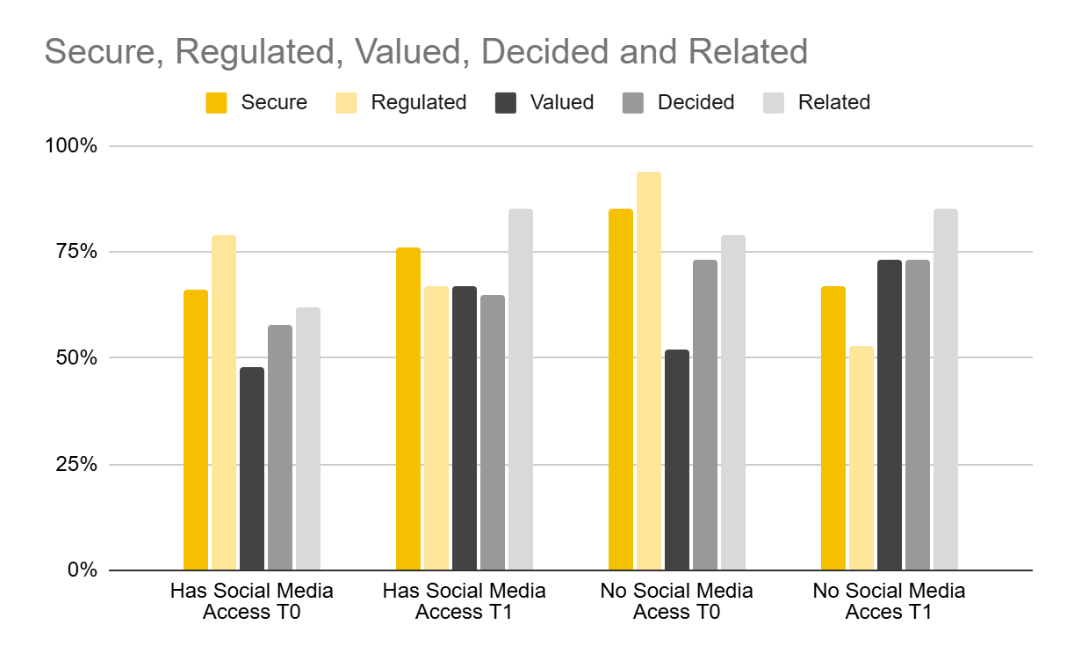
A comparative analysis was conducted before and after the lessons to look at 5-Elements scores for students with social media access versus scores for students without social media access. Overall, students without social media access demonstrated higher scores across all 5 Elements at T0. However, at T1, after lessons were implemented, students revealed mixed results. While students without social media scored higher within the Valued (6 pp), Decided (8 pp), and Related (1 pp) Elements, students with social media scored higher on Secure (9 pp) and Regulated (14 pp) Elements. Furthermore, students with access to social media showed greater improvement in each Element compared to their peers without social media access. They showed improvements in every category, whereas those without social media either showed no improvements (Valued) or showed a decline in scores (Secure, Decided, Related). The Regulated Element had a 1 pp improvement.
With and Without Social Media Access Across the 5-Elements
copyright MindArch Health Inc.
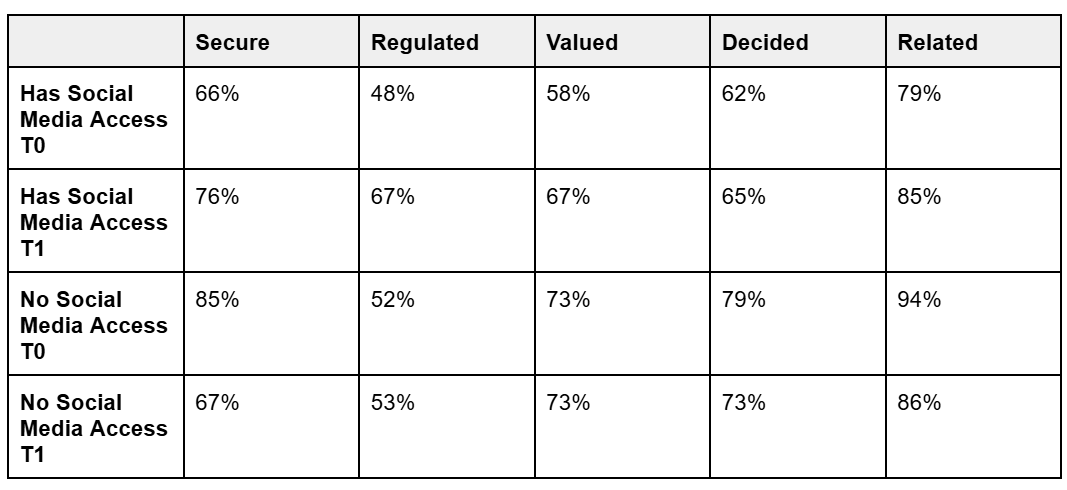
Access to Social Media compared with 5-Elements Scores
copyright MindArch Health Inc.
Teacher Insights and Observations
After each lesson, teachers were asked to provide insights and observations on the lesson and student experiences (COMPLETE PACKAGE, 2026). After lesson 1, 7 teachers offered reflections. However, there was a stark drop off in reflections after the first lesson. Lessons 2 and 3 received 2 reflections each, and lesson 4 only received 1 reflection.
Following lesson 1, a majority of teachers noted that the concepts covered were not age appropriate. One reason was because the vocabulary and content was difficult for the 3rd graders. Other teachers explained that the material was not relevant to the students’ young age. Despite this, one teacher observed “growth in emotional regulation, problem solving, and thoughtful decision making”. After lesson 2, one teacher stated that the content was slightly more age appropriate, however, it still left many students “unsure”. However, the students enjoyed the activities. Students were able to understand lesson 3’s content and could comprehend the activity well. Similarly, students were engaged and enjoyed the activities from lesson 4. One teacher stated that this lesson was age appropriate for 3rd graders.
N=9 teachers submitted exit tickets and reviewed levels of student comprehension, application, engagement, and relevance (COMPLETE PACKAGE, 2026). At the highest level, 86% of teacher ratings reported 3 out of 3 in student engagement. 75% of teacher ratings revealed 3/3 in relevance of the lesson plan. 67% of teacher ratings reported a 3 of 3 in student comprehension. At the lowest was application. 58% of teacher ratings showed a 3 of 3 in application of the lessons in real life.
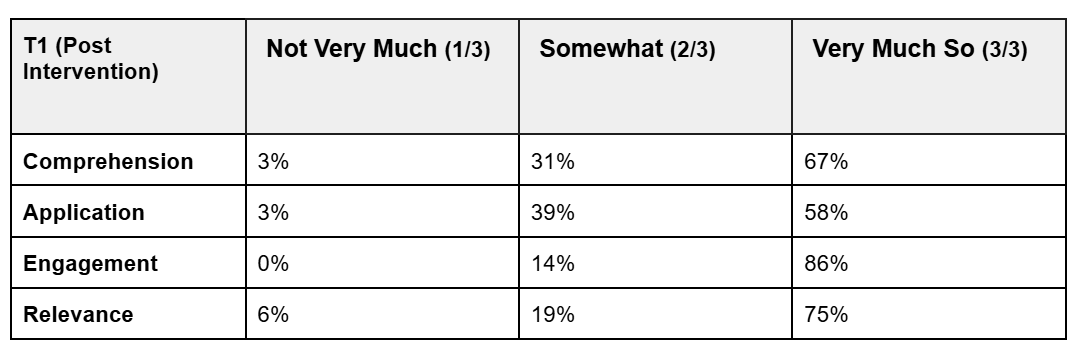
Teacher curriculum rating in 4 categories
copyright MindArch Health Inc.
Discussion
Overview of Findings
To evaluate the intervention’s impact, it is helpful to first consider the operational context in which the curriculum was delivered. The intervention successfully improved overall student well being, particularly in helping youth build emotional resilience and regulate their behaviors in digital environments. Originally designed as an 8 lesson structure with 4 mini lessons across 90 minute periods, the curriculum was adapted into a condensed 4 lesson framework with 45 minute sessions. Additionally, while implementation was initially slated for early spring, unanticipated administrative activities required deferring the timeline to late in the spring semester. Despite this, all students completed a benchmark assessment, one of the two schools completed a post-curriculum assessment, and all teachers completed the reflection questionnaires. A central theme emerged across both student responses and teacher assessments: while students easily grasped theoretical concepts, translating that knowledge into consistent real world habits proved to be a greater challenge.
Looking across the evaluation data, the high level findings fall into three tiers:
Positive Outcomes: The intervention successfully improved overall student well being. Youth built meaningful emotional resilience and learned strategies to regulate their behaviors in digital spaces. Educators noted strong student enthusiasm, observing that the concepts resonated directly with their daily experiences.
Neutral Outcomes: Improvements in foundational developmental indicators such as self worth, decision making, and relational connection were more modest. This aligns with expectations, as deep-seated self-perception and social trust require sustained, long term reinforcement beyond a short-term curriculum.
Key Areas for Growth: Across student reflections and teacher evaluations, a central tension emerged: while students easily comprehended the theoretical concepts in class, translating that intellectual understanding into consistent, real world habits presented a significant ongoing challenge.
Digital Habits and Baseline Awareness
Students demonstrated widespread access to digital devices, particularly entertainment hardware such as televisions, social media platforms, and gaming consoles. Notably, a significant portion of the student body also reported early exposure to artificial intelligence tools, highlighting how rapidly emerging technologies are being integrated into young people's daily environments.
Those who had access to social media demonstrated more significant gains in Secure and Regulated compared to their peers without social media access, whose scores remained the same or slightly declined. This reveals how children who face higher digital environmental stressors (social media/chat exposure) benefit most from learning the science of digital exposure, because they have an immediate environment in which to practice their new “Pause Rotations” and "Highlight Reel” awareness.
Even though there were high levels of access to digital activities, baseline behaviors were influenced mostly by passive habits, including background media consumption, routine web browsing, and interactive gaming. Prior to the curriculum, students primarily focused on winning or playing games generally. Following the curriculum, students increasingly cited safe gaming practices when describing positive digital experiences, such as playing in private rooms, playing exclusively with family members or real-life friends, and avoiding interactions with strangers.
Few students initially reported struggling with screen time or high frequency social media use. This low self reporting may indicate a lack of baseline self awareness regarding problematic screen habits, rather than an absence of friction, as youth often normalize high levels of daily connectivity. It also may indicate that young students may engage in social media activities that cause less friction, providing an opportunity to mitigate future risks during early more benign exposure periods, requiring further exploration. Similarly, few students reported problems with social comparison and body image insecurity.
Growth in Psychological Well Being
Following the intervention, students demonstrated notable growth across all key indicators of psychological health.The most pronounced improvements occurred in feelings of security (14% points, from 61% to 75%) and self-regulation (13% points, from 52% to 65%). By learning to identify digital manipulation strategies and tune into their own mental states, students felt safer and more in control of their online experiences.
Gains in self-worth (4 percentage points, from 66% to 70%), decision-making (6 percentage points, from 62% to 68%), and relational connection (4 percentage points, from 80% to 84%) were more modest.This outcome aligns with developmental expectations, as deep-seated feelings of personal value and social connection require long-term reinforcement and are less likely to shift dramatically over a short curriculum.
Educational Outcomes and the Implementation Gap
An analysis of the four distinct lessons revealed varying levels of student mastery across core concepts:
Recognizing Bias and Social Comparison: Students performed best in lessons centered on social perception and the "highlight reel" nature of social media (72% mastery on exit tickets). The vast majority easily recognized how online content is curated and successfully identified sampling bias.
Somatic Awareness and Emotional Cues: Lessons teaching students to view physical sensations as emotional signals were also highly successful (69% mastery). Students readily understood how bodily reactions reflect internal stress or anxiety.
Persuasive Design and Reward Loops: Students demonstrated moderate understanding of how apps use rewards and habit loops to hold their attention (56% mastery).
Critical Thinking and Source Evaluation: Evaluating online claims and distinguishing myth from evidence proved to be the most challenging concept (32% mastery), indicating that online media literacy requires more extensive scaffolding.
Teachers corroborated these findings through their own evaluations. Educators overwhelmingly praised the curriculum's high engagement and clear relevance to student lives. However, when evaluating outcomes, teachers consistently rated real-world application lower than general comprehension. This is due to the fact that cognitive internalization naturally precedes outward, observable classroom habit change. Post-lesson teacher reflections revealed observations of immediate behavioral shifts. However, students’ 48-hour delayed exit tickets demonstrated how students were internalizing metacognitive tools ("biological signals", "highlight reels") that manifest during independent screen time. This highlights the necessity of self-assessments and exit tickets alongside teacher observations.
Student Insights
Qualitative statements reflected a strong conceptual grasp of the material:
Students recognized that flawless online personas do not reflect reality.
They identified the psychological mechanisms behind digital reward loops that drive repeated app usage.
They began using physical symptoms, such as sweaty palms, as cues to pause and evaluate their emotional states.
Future Recommendations
To address the gap between comprehension and action, future iterations of the curriculum should:
Expand Critical Thinking Modules: Dedicate multiple sessions to source evaluation and online critical thinking, rather than treating it as a single unit.
Focus on Actionable Habits: Introduce direct behavioral nudges, classroom routines, and practical strategies to help students bridge the gap between understanding digital risks and changing their actual daily online behavior.
Limitations
While the “See Clearly, Choose Kindly” pilot program yielded meaningful shifts in student mindset and digital behavior, several factors limit the scope and generalizability of these findings. A total of 163 students participated in the pilot across two schools, with 159 students completing the pre-assessment (T0). However, only 56 student responses were successfully matched between T0 and the post-assessment (T1), as only one school was able to complete the post-assessment due to administrative constraints beyond the scope of this pilot. While this limits the generalizability of the longitudinal findings, the matched data remains meaningful and the T0 responses across both schools provide a baseline profile of third-grade digital behavior and systemic well-being. Additionally, the pilot was conducted within a small rural school district; findings may not be representative of students in urban or more demographically diverse communities. Future replications across varied contexts would strengthen generalizability.
The primary data source was the student self-assessment, which introduced the possibility of social desirability bias among 8-9 year old students despite standardized teacher scripts emphasizing there were no right or wrong answers.At the third-grade level, students are still developing the literacy and cognitive maturity required to engage with abstract scientific concepts such as sampling bias or variable reward systems. Teacher curriculum reflections raised broader concerns about age appropriateness, with some teachers suggesting the curriculum may be better suited to older students. Applications received the lowest teacher rating across all four dimensions at 58%. However, exit-ticket responses demonstrated that students were able to internalize and apply key concepts after each lesson. This suggests the limitation lies less in student comprehension and more in the disconnect between teacher-perceived and student-demonstrated understanding.
Looking ahead, the curriculum and its corresponding assessments were delivered over a 4-week timeline. This study does not account for the long-term retention of digital resilience skills or whether observed behavioral shifts persist into the high-intensity digital usage years. As an initial pilot, the primary focus was establishing the feasibility and adoptability of the curriculum within the school setting rather than measuring home environment variables. Given that home reinforcement is a central component of the systemic wellbeing model, the absence of caregiver data limits the study's ability to quantify the home environment's influence on student growth outcomes. Both longitudinal follow-up and future examination of caregiver engagement represent meaningful directions for subsequent research once the curriculum is more broadly established.
Conclusion
The "See Clearly, Choose Kindly" pilot program demonstrates a critical paradigm shift in how school systems and public health practitioners address youth digital safety. While contemporary policy responses overwhelmingly favor environmental restriction, such as bell-to-bell smartphone bans, these reactive measures only manage screen access within school walls. By contrast, equipping third-graders with a metacognitive understanding of the social and biological mechanics of technology (dopamine reward loops, algorithms, and sampling bias) builds an "internal armor" that protects students across all environments. The findings confirm that eight- and nine-year-olds possess the cognitive capacity to grasp complex socio-ecological concepts when framed through age-appropriate science.
The empirical data validates the curriculum as a salutogenic stress-buffering, protective solution. While baseline data revealed that high technology access does not equal high-frequency social media use in third grade, students navigating real-world digital exposure experienced the most profound gains post-intervention, improving by 19 percentage points in emotional self-regulation and 10 percentage points in feelings of security. Teaching children why technology impacts their brains and bodies provides an active shield, transforming immediate digital friction into an opportunity to practice self-regulation and evaluate the digital environment critically.
The study highlights the feasibility of developing the mechanisms for digital resiliency in third graders. The divergence between high student concept retention on delayed exit tickets (72% mastery on sampling bias; 69% on somatic signals) and lower teacher-rated real-world application (58%) reflects a standard intention-behavior gap. Internalized metacognitive awareness naturally precedes outward, observable habit formation. As school districts look to build sustainable social-emotional learning frameworks, "See Clearly, Choose Kindly" provides a scalable, evidence-based program for primary prevention by equipping young learners with digital resilience before they enter the high-intensity media years of adolescence.
References
Borodovsky, J. T., Squeglia, L. M., Mewton, L., & Marsch, L. (2024). Longitudinal use patterns of technology subtypes during the transition into early adolescence: Results from the ABCD Study. The Journal of adolescent health : official publication of the Society for Adolescent Medicine, 75, 809 - 818. https://doi.org/10.1016/j.jadohealth.2024.06.020
Canale, N., Elgar, F. J., Pivetta, E., Galeotti, T., Marino, C., Billieux, J., King, D. L., Lenzi, M., Dalmasso, P., Lazzeri, G., Nardone, P., Camporese, A., & Vieno, A. (2025). Problem gaming and adolescents' health and well-being: Evidence from a large nationally representative sample in Italy. Comput. Hum. Behav., 168, 108644. https://doi.org/10.1016/j.chb.2025.108644
Conner, M., & Norman, P. (2022). Understanding the intention-behavior gap: The role of intention strength. Frontiers in Psychology, 13, 923464 https://doi.org/10.3389/fpsyg.2022.923464
"COMPLETE PACKAGE FOR LIE_See Clearly Choose Kindly, MindArch Health Assessment Package_ for Long Island Explorium 3.25.2026", MindArch Health
Frielingsdorf, H., Fomichov, V., Rystedt, I., Lindstrand, S., Korhonen, L., & Henriksson, H. (2025). Associations of time spent on different types of digital media with self-rated general and mental health in Swedish adolescents. Scientific Reports, 15. https://doi.org/10.1038/s41598-024-83951-x
Giovanelli, A., Rowe, J., Taylor, M., Berna, M., Tebb, K. P., Penilla, C., Pugatch, M., Lester, J., & Ozer, E. M. (2023). Supporting Adolescent Engagement with Artificial Intelligence–Driven Digital Health Behavior Change Interventions. Journal of Medical Internet Research, 25, e40306. https://doi.org/10.2196/40306
General (OSG), O. of the S. (2023). Social Media and Youth Mental Health. In Social Media and Youth Mental Health: The U.S. Surgeon General’s Advisory [Internet]. US Department of Health and Human Services. https://www.ncbi.nlm.nih.gov/books/NBK594759/
Hammond, S. P., Polizzi, G., & Bartholomew, K. J. (2023). Using a socio-ecological framework to understand how 8–12-year-olds build and show digital resilience: A multi-perspective and multimethod qualitative study. Education and Information Technologies, 28(4), 3681–3709. https://doi.org/10.1007/s10639-022-11240-z
Holly, L., Demaio, S., & Kickbusch, I. (2024). Public health interventions to address digital determinants of children’s health and wellbeing. The Lancet Public Health, 9(9), e700–e704. https://doi.org/10.1016/S2468-2667(24)00180-4
Kerr, S., & Kingsbury, M. (2023). Online digital media use and adolescent mental health. Health Reports, 34(2), 17–28. https://doi.org/10.25318/82-003-x202300200002-eng
Lee, T. Y., Cheung, C. K., & Kwong, W. M. (2012). Resilience as a Positive Youth Development Construct: A Conceptual Review. The Scientific World Journal, 2012, 390450. https://doi.org/10.1100/2012/390450
Mooney, M. E., Middlecamp, C., Martin, J., & Ackerman, S. A. (2022). The Demise of the Knowledge–Action Gap in Climate Change Education. Bulletin of the American Meteorological Society, 103(10), E2265–E2272. https://doi.org/10.1175/bams-d-21-0256.1
Martin, F., Long, S., Haywood, K., & Xie, K. (2025). Digital distractions in education: A systematic review of research on causes, consequences and prevention strategies. Educational Technology Research and Development, 73(6), 3423–3451. https://doi.org/10.1007/s11423-025-10550-6
Masten, A. S., & Gewirtz, A. H. (2006). Resilience in Development: The Importance of Early Childhood.
Nagata, J. M., Ganson, K., Iyer, P., Chu, J., Baker, F., Gabriel, K., Garber, A., Murray, S., & Bibbins-Domingo, K. (2021). Sociodemographic Correlates of Contemporary Screen Time Use among 9-10-Year-Old Children. The Journal of pediatrics, 240, 213 - 220.e2. https://doi.org/10.1016/j.jpeds.2021.08.077
New York City Public Schools. (n.d.) Cell Phone and Electronic Device Policy. Web. Retrieved June 10, 2026, from https://www.schools.nyc.gov/about-us/policies/cell-phone-and-electronic-device-policy
New York State. (n.d.). Before the First Day of School, Governor Hochul Reminds Parents to Review the Distraction-Free Policy for Their Child’s School District | Governor Kathy Hochul. Retrieved June 9, 2026, from https://www.governor.ny.gov/news/first-day-school-governor-hochul-reminds-parents-review-distraction-free-policy-their-childs
Paulich, K. N., Ross, J. M., Lessem, J., & Hewitt, J. (2021). Screen time and early adolescent mental health, academic, and social outcomes in 9- and 10- year old children: Utilizing the Adolescent Brain Cognitive Development ℠ (ABCD) Study. PLoS ONE, 16. https://doi.org/10.1371/journal.pone.0256591
Qi, C., & Yang, N. (2024). Digital resilience and technological stress in adolescents: A mixed-methods study of factors and interventions. Education and Information Technologies, 29(14), 19067–19113. https://doi.org/10.1007/s10639-024-12595-1
Weigle, P. E., & Shafi, R. M. A. (2024). Social Media and Youth Mental Health. Current Psychiatry Reports, 26(1), 1–8. https://doi.org/10.1007/s11920-023-01478-w
